A solar generator and a gas generator both keep the lights on, but they are different machines with different costs and different limits. Comparing them on price alone misses the point, because the cheaper unit may cost more to run, and the quieter unit may not carry the load. The useful comparison comes down to three areas: emissions and safety, the experience of living with the unit, and the boundaries of what each one can do. This article looks at all three so the choice is based on fit rather than on a single number. The comparison only works when all three are on the table. Price alone hides the rest.
Emissions and Safety
Harmful exhaust output
A gas generator produces carbon monoxide, which is invisible and can kill in a closed space. It must run outdoors, away from windows and doors, and it needs a carbon monoxide alarm near the sleeping area, tested before the first storm. Anyone asking how much does a generator cost should include that safety gear in the price: a covered outdoor spot and an alarm are not optional extras. A solar generator produces no exhaust at all, so it can run indoors—that difference alone changes where and how the unit can be used. For a fuel unit, the alarm is part of the purchase, not an accessory. Anything less is a gamble.
Safe storage requirements
Fuel storage is the second safety issue. Gasoline goes stale, propane has to be handled carefully, and both need a ventilated space away from ignition sources. Store fuel in an approved container, away from the house, and never in a basement or a garage attached to the living space. Rotate it every few months, because stale fuel is a common reason a generator will not start. A solar generator stores energy in a battery instead—no fuel to spill, no fumes to vent, no rotation schedule. The battery should still be kept cool and dry, with the vents clear. Both technologies demand respect; they simply demand different kinds. With solar, the storage question is simpler, and that simplicity is part of the appeal.
User Experience
Silent operation vs engine noise
The experience difference is immediate. A gas generator runs at conversation-stopping volume, which makes it a poor neighbor and a worse housemate. A solar generator is nearly silent, so it can run overnight in a bedroom or a tent without disturbing anyone. That matters more than the decibel rating suggests, because a unit that is too loud to run at night is a unit that cannot protect a sleeping household. A fuel generator also produces vibration that travels through walls and floors, which is why neighbors can hear it even when the windows are closed. The silence of a battery unit is a quality-of-life feature, not a luxury.
Maintenance
Maintenance separates the two as well. A gas generator needs oil changes, spark plugs, fuel treatment, and an exercise schedule to stay reliable. A solar generator needs clean vents, a charged battery, and an occasional check of the cables. Neither is maintenance-free, but the solar unit has far fewer moving parts and no fluids to change. Over five years, that difference shows up in both time and money. A generator that sits idle for a year often needs a service before it will run, and the service is the expensive part. A battery unit that sits idle needs a charge, which is a much cheaper form of neglect.
Use Boundaries
Power ceiling and scenario matching
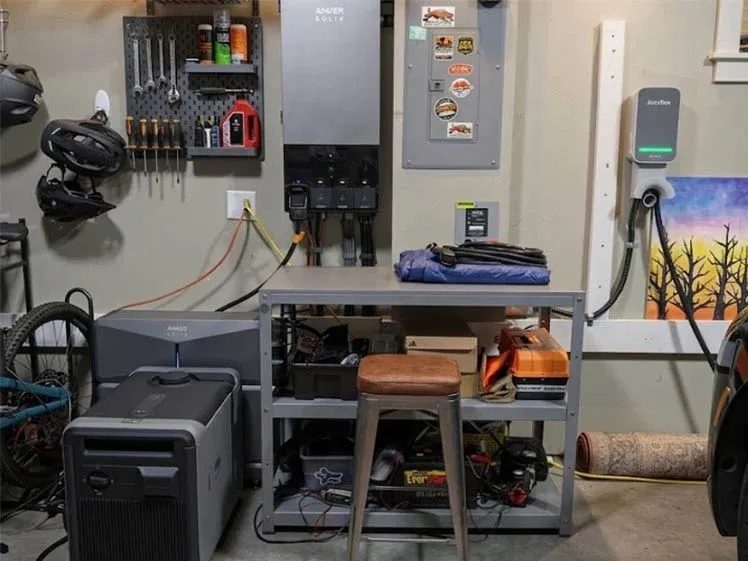
The boundaries are where gas still has an edge. A fuel generator can run for days as long as fuel lasts, and large units can carry a whole house. A solar generator is limited by its battery and its charging speed. But that limit is moving: the Anker SOLIX E10 Whole-Home Backup, for example, offers 7,680W of continuous output and a 10,000W turbo mode, enough for a whole-home panel in many cases, with expandable battery capacity for longer outages. It still needs a recharge plan, but a pack that can grow with the load makes the plan simpler. Match the unit to the outage length, not just the load. A fuel unit refuels in minutes; a battery unit recharges from the sun or the grid. For a multi-day outage, that difference still matters—but a solar unit sized to the outage, like the E10, narrows the gap every year.
price and cost
Price and cost are different numbers. A gas generator is cheaper to buy and more expensive to run, once fuel, oil, and maintenance are included. A solar generator costs more up front and less per hour, especially when it charges from the sun. The break-even depends on how often the unit runs and what fuel costs locally. Compare the five-year totals, not the sticker price, and the comparison becomes fair. Fuel prices move, and a long outage can consume more fuel than expected. A solar unit's running cost is close to zero once the panels are paid for, which makes the long-term math more predictable.
Conclusion
Emissions, experience, and boundaries are the three ways the two machines differ. Gas wins on runtime and raw power; solar wins on safety, noise, and running cost. Most households are better served by choosing based on the outage they actually face rather than on the specification that looks best on paper. The right answer is the one that fits the home, not the one that wins a spec sheet. The two machines are not rivals so much as tools for different jobs. Choose gas for runtime and raw power, solar for safety and quiet, and a combination when neither alone is enough. The home that understands the trade-offs is the one that chooses well.