
Introduction
Eliminating prototyping waste begins with an early DFM review, and making sure that each part is built to the same tolerance. By opting for commonly available sheet thicknesses and setting the bend compensation right, we will not only remove assembly interference but also reduce the number of trial cycles and the amount of scrap by 30%.
What Are the Core Processes and Tech Trends in Modern Precision Sheet Metal Manufacturing?
Precision sheet metal manufacturingis carried out via laser cutting, bending with a computer numeric control (CNC), and welding. Fiber lasers, among others, can produce a kerf of 0.1 mm and accuracy of ±0.03 mm on complex contours.
Laser Cutting and CNC Bending Innovations
Fiber laser resonators working at 12 kW cut stainless steel up to 25 mm with low HAZ. Press brakes are equipped with optical sensors for detecting and correcting bending errors during the forming operation.
Automation and Multi-Process Integration
Cells for bending parts automatically save more time with less setup, while keeping bend angles the exactly same. Multi-process integration reduces delivery time to 3–5 days. These tech trends have revolutionized prototype development.
How Can Engineers Optimize Sheet Metal Fabrication Costs During Low-Volume Prototyping?
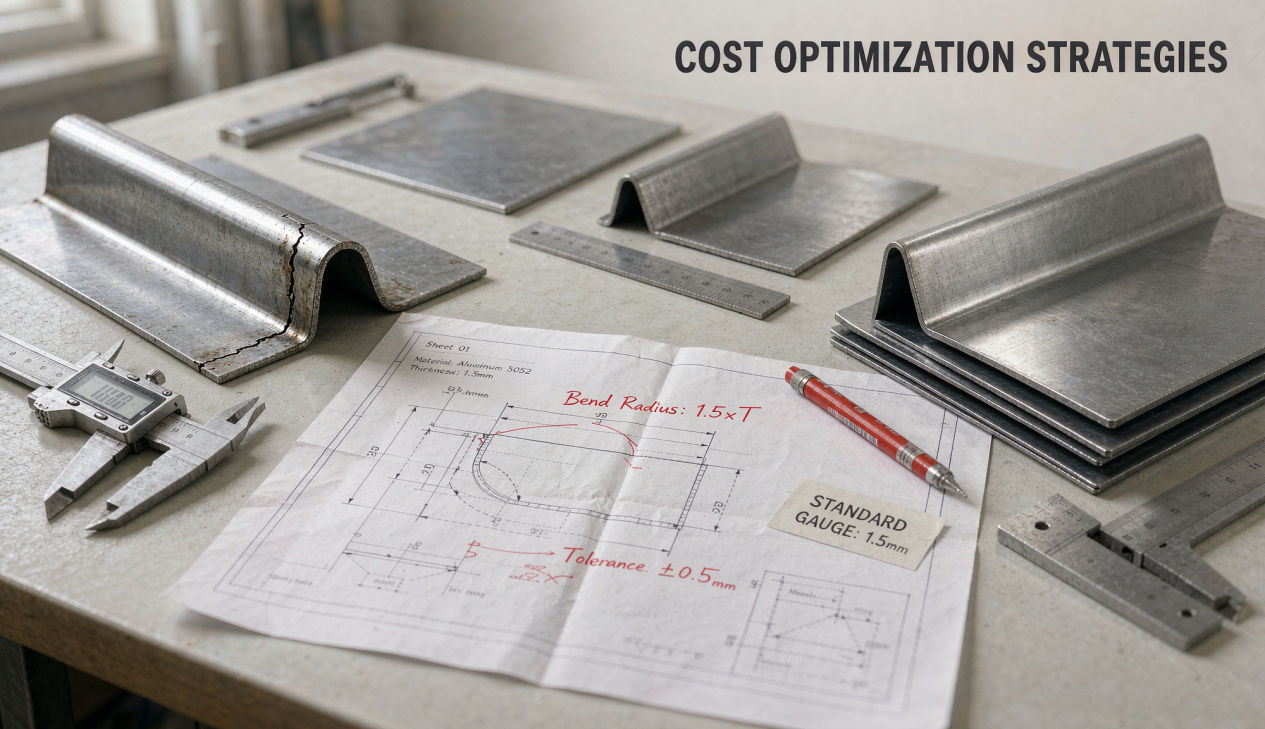
Figure 2: Correctly specifying bend radius and standard gauges prevents material cracking and optimizes sheet metal fabrication costs.
Prototype cost has three major factors: use of non-standard materials, setting of overly tight/undefined tolerances, and execution of complicated deep-cavity bends.
Major steps to minimize sheet metal fabrication cost:
- Standardize sheet thickness: Use common thickness gauges (1.0, 1.5, 2.0 mm) to avoid additional charges and delays.
- Relax non-critical tolerances: set ±0.5 mm for cosmetic surfaces and ±0.1 mm for mating features thereby saving 30% of the inspection time.
- Simple bend geometry: bend count under 6 per part and keep minimum bend radius 1.5× material thickness.
Material utilization by nesting is the key element per-part cost. By the layout optimization one can achieve utilization at 85–90% whereas by the regular nesting it is only 60–70%. Such industrial design tips are saving costs 25–40% at the same time maintaining performance.
What Essential Qualifications Should You Evaluate When Selecting Overseas Sheet Metal Fabricators?
To effectively evaluate a partner abroad, you are better off using a model that highlights technical capability and quality systems.
Main evaluation criteria:
- Quality management certification: ISO 9001 is the minimum expected for process control and batch consistency.
- Machine tools inventory: Check if the partner has fibercutters (≥ 6 kW), CNC press brakes with an angle sensor, and CMM systems.
- On-time delivery performance: get historical OTD reports; the best in class are ≥ 98% OTD.
- Engineering team’s responsiveness: get an impression of the team’s speed and DFM quality during quote period.
While choosing sheet metal fabrication China partners, give preference to facilities with proven experience in the industry sector. Engineering staff reviewing potential manufacturing partners can refer to a comprehensive structure containing an up-to-date list of main China sheet metal fabrication manufacturers, machinery reference equipment and certificate checklist for top class service providers. The top-rated China fabricators 2026 are characterized through certified manufacturing processes and consistent reliability in delivery.
How Do Custom Sheet Metal Services Ensure Strict Tolerance Consistency in Complex Parts?
Maintaining tolerance consistency in multi-bend parts requires addressing material springback and grain direction variation.
Springback Compensation and Grain Direction Effects
Springsback changes: aluminum 6061 is 1–3°, stainless 304 is 3–5°. Grain direction influences bend quality, bending parallel to rolling axis causes greater chance of cracking. Sophisticated custom sheet metal services use pre-programmed algorithms to correct bend angles.
Process Control Under IATF 16949
Road car and industrial applications require IATF 16949, which calls for FMEA, capability studies (Cpk ≥ 1.67) and full traceability. Work with qualified sheet metal fabrication suppliers early on to undertake a tolerance stack-up analysis before tooling.
Investigate the way in which a certified sheet metal fabrication suppliers chain handles these control measures. These business solutions will guarantee fastener security and weld distortion control.
How Does End-to-End Manufacturing Reduce Supply Chain Risk for Hardware Projects?
If one factory handles all operations, cutting shaping treatment of a surface, assembly, there will be less hassle of a supply chain and risks of delivering goods will be lesser.
Main benefits:
- Less total lead time: Removes coordination delays which results in compression of the timelines by 30-40%.
- The only interface for issues: Quality problems addressed within without the supplier-to-supplier argumentation process.
- Uniform quality standards: the same process control applies throughout all phases.
Compliance with the ISO 14001 and AS9100D standards demonstrates how green manufacturing and traceability is done. Production companies like LS Manufacturing integrate multi-level processes using their own certifications as bases for delivering stably from prototype to mass production. This method of the manufacturing guide allows going up from 10 to 10,000+ parts without switching suppliers.
Conclusion
The key to successful sheet metal development is a combination of a scientific design approach that is supported by stringent manufacturing controls and dependable collaboration. Bringing the knowledge base of the manufacturing process into the design phase prevents unnecessary work and speeds up product launch. For complex problems, involve full-process experts. Forward 3D drawings for feasibility analysis and cost reduction.
FAQs
What is the most common mistake made during the sheet metal prototyping phase?
One primary mistake is overlooking the interaction between the internal bend radius and material thickness, which can result in crack formation or a change in overall metal part dimensions. It is crucial for the designers to mention the required relief slot sizes and clearance hole sizes using their tooling dimensions as a reference.
What are the primary advantages of laser cutting compared to traditional stamping?
Laser cutting does not involve heavy machinery and tools, making it less costly on tools. Laser is able to cut at high speed, even very complicated shapes, which is very good for the design changes and flexibility of prototyping production with delivery of small batches.
How should you evaluate the overall delivery capabilities of an overseas fabrication plant?
A comprehensive review of machinery capability detail, CMM inspection level, qualification certification, and how smoothly the engineering team works with the suppliers to demonstrate the supplier’s understanding of custom parts manufacturing.
How do surface finishing treatments affect final sheet metal dimensional tolerances?
Anodizing, powder coating, and other surface treatments can add thickness from microns to millimeters. Designers must include space for such coatings on the drawing to ensure parts will still fit without causing friction or interference at the assembly hole or thread level.
What engineering support can LS Manufacturing provide when seeking a reliable fabricator?
LS Manufacturing delivers full engineering service, covering from initial design for manufacturability and prototype test run, right through to bulk production, all with the full CNC machining system and quality control package at disposal.
About the Author
This article was compiled by the industrial structural engineering consulting team, specializing in precision machining, metal forming, and lean production. They provide engineering design and manufacturing optimization strategies for global hardware startups and industrial equipment manufacturers, helping overseas teams achieve cost-efficient delivery.