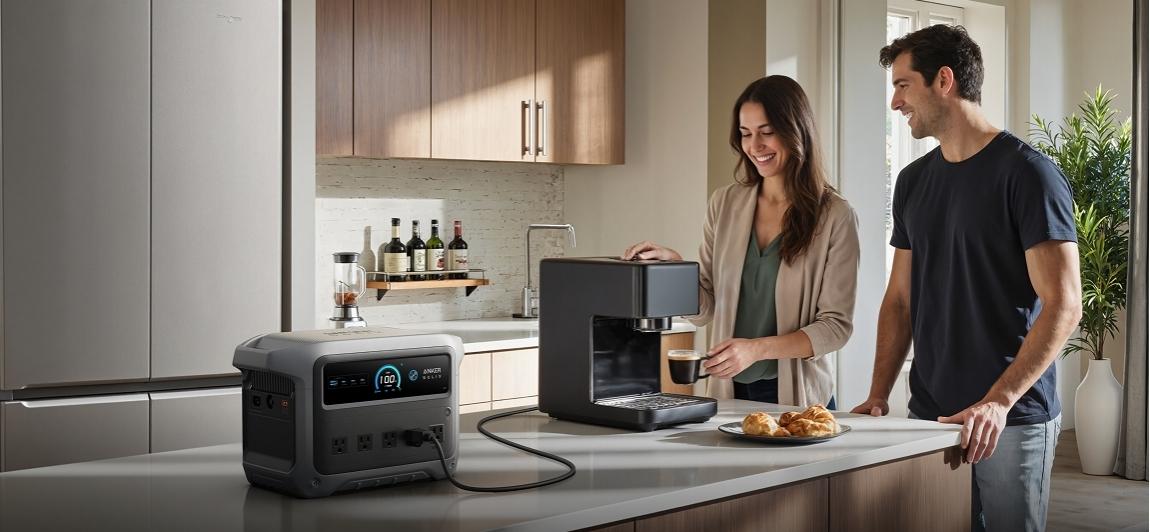
A portable power station review should focus on how the unit performs in real situations, not just the battery number on the box. Capacity matters, but usable wattage, port behavior, recharge speed, and day-to-day portability often decide whether a model feels practical. The Anker SOLIX C1000 Gen 2 is a good example of why that broader view matters. Its spec sheet looks strong, yet the real question is simpler: can it run your gear reliably, recharge fast enough, and move easily between home backup, outdoor trips, and mobile work without creating new compromises?
Does the Power Station Support the Equipment You Use?
Assess Continuous Output and Appliance Startup Capability
Continuous output tells you what the power station can run steadily, while surge or peak output shows whether it can handle startup spikes from devices like small appliances, power tools, or compressors. The Anker SOLIX C1000 Gen 2 delivers 2,000W of continuous output and 3,000W peak power, which gives it enough headroom for many everyday loads beyond phones and laptops. That matters more than raw battery size if you want one unit for mixed use. A higher output ceiling reduces the need to micromanage what is plugged in, and stronger startup capability helps avoid shutdowns when a device briefly demands more power at launch.
Evaluate Port Power and Limits When Connecting Multiple Devices
A power station can have plenty of battery capacity and still feel limiting if the ports are poorly balanced. Look at the type and number of outlets you need most, then consider how total output is shared when several devices run at once. Charging a laptop, powering a monitor, topping up phones, and running a small appliance can quickly stack up. The practical test is whether you can use your normal kit without constantly unplugging something else. Good port variety improves convenience, but stable delivery under combined load matters more. For everyday use, the best setup supports simultaneous charging and operation without forcing careful rotation between essential devices.
How Convenient Is It Between Uses?
Review Charging Speed Alongside Available Power Sources
Recharge speed shapes how useful a portable power station feels after the first discharge. A model that takes all night to refill is harder to rely on for frequent use, emergency backup, or back-to-back trips. The Anker SOLIX C1000 Gen 2 stands out here: it can fully recharge in 49 minutes using upgraded 1,600W HyperFlash charging. For off-grid use, it also supports up to 600W solar input with a 60V maximum and can fully recharge in about 1.8 hours under suitable solar conditions. That flexibility gives it a clear advantage between uses, because you can restore power quickly from the wall or build a more sustainable charging routine outdoors.
Assess Weight, Storage Space and Ease of Transport
Portability is not only about whether a unit has a handle. Weight, shape, and storage footprint determine how often you will actually move it. A bulky station may work fine once installed, yet become annoying for car packing, carrying to a campsite, or shifting between rooms during an outage. The Anker SOLIX C1000 Gen 2 weighs 11.3 kg and measures 38.4 cm wide, making it 14% smaller and 11% lighter than comparable models. Those reductions matter in daily use. It is easier to lift, fits more cleanly into tight storage spots, and creates less friction when you need power where a fixed outlet is unavailable.
Where Does This Model Fit—and What Are Its Limits?
Evaluate Its Fit for Mobile Work, Camping and Essential Backup
This model fits best where users need one power source for several realistic jobs rather than extreme runtimes. For mobile work, it can support common electronics and reduce dependence on wall outlets. For camping, it offers enough output for comfort-focused gear without feeling oversized. For essential backup, it is well suited to keeping communications devices, lighting, and selected household equipment running through shorter interruptions. That combination makes it practical for users who value versatility. Its strength is balance: meaningful power, fast turnaround, and manageable size. It works especially well when you want dependable portable energy without stepping into a much heavier, more space-hungry category.
Weigh Fixed Capacity Against Longer-Term Energy Needs
The main limit is straightforward: 1,024Wh is useful, but it is still a fixed energy reserve. High-draw appliances will drain it much faster than low-power essentials, so runtime planning remains important. If your goal is to support refrigeration, heating devices, or several larger loads for extended periods, capacity becomes the constraint even when output is sufficient. That does not weaken the product’s value; it clarifies its role. This is a strong option for short-duration backup, active travel, and recurring portable use, not a substitute for a whole-home energy system. Buyers should match expected runtime, not just wattage, to their actual needs before deciding.
Conclusion
A smart portable power station review looks past capacity and asks how the unit behaves in daily use. The Anker SOLIX C1000 Gen 2 makes a strong case by combining solid output, fast recharging, solar support, and a more manageable size. Those qualities improve real convenience far more than a battery number alone. If you need portable power for work, trips, or essential backup, this model fits well. Its limits are mostly about runtime, not usability, which makes it a practical choice for users who want balanced performance rather than excess.